
I have discussed my wideangle lens dilemma quite a few times on this blog, and the latest update on this topic was that I got myself a 14mm lens, the Samyang MF 14mm f2.8 ED AS IF UMC. That’s a lot of abbreviations… let’s see:
- MF: Manual Focus
- ED: ”abbreviation which indicates that a photographic lens is equipped with a lens or a few lenses with low dispersion. — This type of lenses allows to minimize the chromatic aberration.” (quoted from Samyang’s site)
- IF: Internal Focusing
- UMC: ”Ultra Multi Coated, the abbreviation indicates that a lens or filter has been covered with multi-layered, anti-reflective coating which minimizes reflections and increases image contrast.” (from Samyang’s site)
So the first thing that strikes out is that this is a manual focus lens. Being 14mm, it’s not such a big deal – there’s a lot of DOF (depth of field) to work with. I have no experience of manual focus lenses and I’ve only ever done manual mode with macro, where the DOF is wafer thin. So my initial thought was that I would set the lens at f8 and set focus just short of infinity and I’ll be home safe, but it turned out that it’s not quite that simple. You have to be really close to the foreground and I found that near-infinity focus and f8 does actually not provide sharpness to the foreground (more about that further down in the review). But none of this of course in any way makes the lens better or worse – I’m just saying that at 14mm, you need to learn some new tricks if you’re not already familiar with extreme wideangles.
The lens is also manual in that you set the aperture on the lens itself. The benefit is that you always get the right DOF in the viewfinder, without pressing the DOF preview button like you do with AF lenses. And of course, the smaller the aperture, the darker the viewfinder. When you step down to f11, the viewfinder is getting so dark that you can’t really see where you are setting the focus, so sometimes you need to do your focusing at f2.8 and then step down before taking the picture.
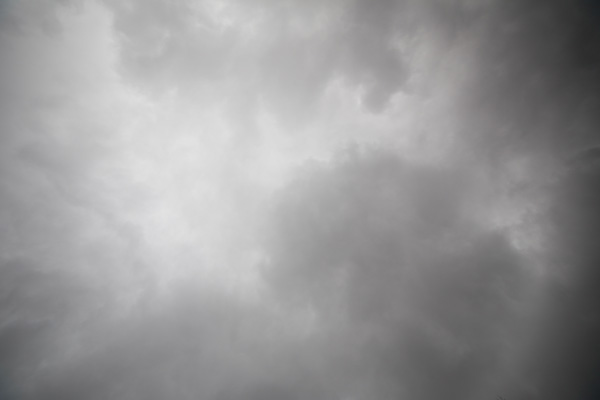
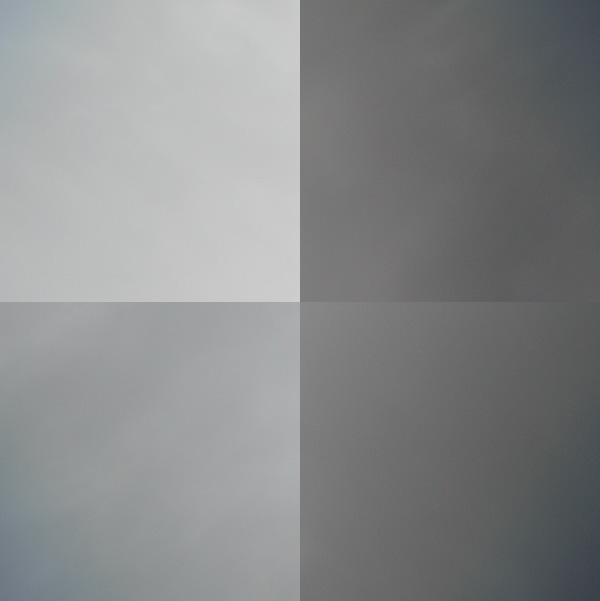
But enough about the technique. What really matters is the quality of the pictures the lens produces, so here’s the good and the bad: 1) almost no chromatic aberration (so the ”ED” abbreviation in the lens name is no gimmick, Samyang really delivers here), 2) extreme corner vignetting. The corner vignetting is an interesting issue. Normally when a lens vignettes, it happens on quite a large area and you can remove it in e.g. Lightroom using the vignetting tool. But with this Samyang, it’s not the same kind of vignette, instead, it looks more like those dark corners you get when you stack filters on a lens and I think this is caused by the lens hood (integrated to the lens). The vignetting tool in post processing is powerless against this, but I found that the healing brush works great. Normally you only see this vignetting in even areas like the sky, which makes it easy to heal. However, wide open the vignetting is quite extreme, which makes it trickier to remove. Also the vignetting is happening more on the right hand side which makes it a bit unbalanced in horizontal compositions if you were to use vignetting as an artistic effect (which we do sometimes, I mean occasionally I add vignetting to a picture if it doesn’t already have it…).
And then maybe the most important question, how sharp is this lens? Well, here’s the good news, it’s very sharp, all up to the corners once you take DOF in consideration (more about that below). But I’m no pixel peeper so I won’t do any lens chart tests, I judge sharpness by taking the pictures I normally take and then decide if it’s good enough or not. And the Samyang is good, no doubt about that.
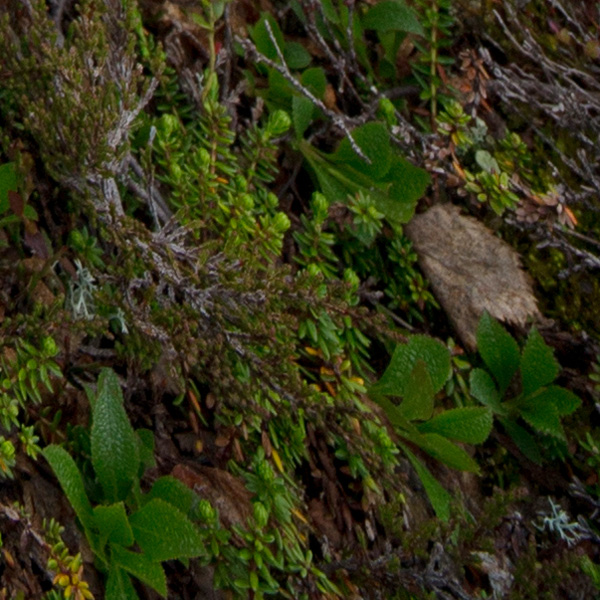
When I took the first pictures, my initial reaction was that the corners were extremely soft. I got a little bit worried to be honest, I mean some softness can be expected but what I was seeing was really bad. But after some experimentation, I realised that what I was seeing was not a defect in the lens, but it was in fact a natural effect of DOF. The thing is, with a lens this wide, if you want to have something prominent in the foreground then you normally have to be extremely close to it. At the same time, you don’t want to lose sharpness in the middle ground and if possible, it would be nice if the background is in focus as well… but that’s just asking too much. Even at 14mm, it is very tricky to get everything from 28cm to infinity in focus. So it’s easy to miss the closest foreground, and that results in very soft (=out of focus) corners. When I used the correct focusing distance for the closest foreground, I found that the corners were in fact much sharper than I had expected from such a wide lens! But by focusing like that, the rest of the frame was out of focus. I’m not used to dealing with this issue, but then again, none of my other landscape lenses require me to be this close to the foreground. With that said, when you take user error out of the equation, you’ll find that this is one sharp little lens.
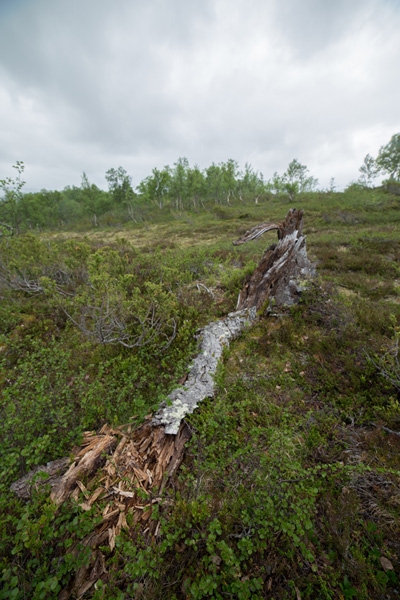
With the lens being completely manual, it means it’s not transferring any data to the camera. The camera meters correctly because it measures the light that reaches the sensor, but there’s no information exchange, so EXIF doesn’t give you any information about the lens at all. Which is kind of a big deal for me, because it means that it’s not possible to search the images in the catalog based on the lens information. I’ve worked around this problem by creating a smart collection in Lightroom which is based on elimination – everything that is not all the other lenses I have, is Samyang. As long as I don’t get another manual lens, it will work!
In summary
+ sharp
+ no chromatic aberrations
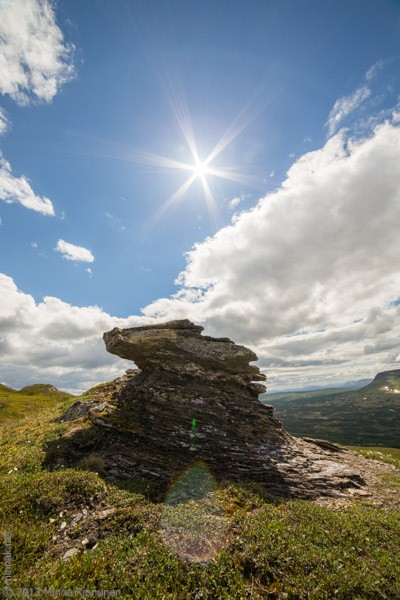
+ low flare, even with the sun in the frame
+ solid construction
– extreme and unbalanced vignetting
Furthermore a couple of issues which are related to the construction of the lens, rather than the quality:
– no lens settings transferred to camera
– can’t use filters (front element is bulky)
– only 6 diaphragm blades, which makes for a slightly dull starburst effect
Verdict
As a whole, I’m very pleased with the lens. The only bad thing about it is the extreme vignetting wide open, so it remains to be seen what happens with the night photos. But then again, it’s 14mm and 20 MP (with my 6D), which leaves some room for cropping to get rid of those nasty corners.
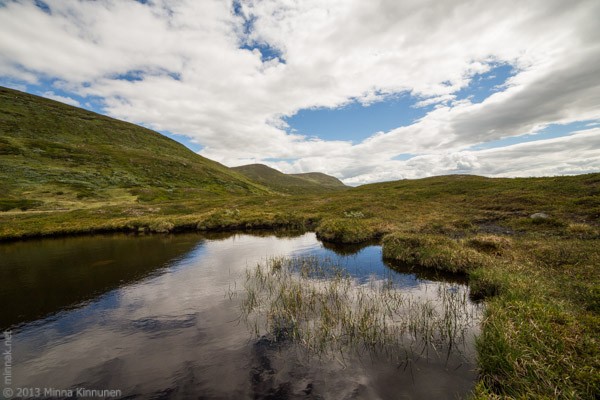
If you’re specifically looking for an ultra-wide lens, then I can definitely recommend the Samyang 14mm. But if you’re looking for a wideangle lens for big landscapes, then I would advise you to consider something a bit longer, in the 16-20mm range. With 14mm, you’ll find that the big mountains in your grand landscape are so small that they are barely recognisable!
Lämna ett svar