
We made an excursion to one of the best – or the best – botanical places in Loos. We were there a couple of years ago but it was rainy and cold and my fingers were frozen, so it didn’t make quite such an impact on me as it should have, because the variety of life is just astonishing. All kinds of rare or rare-ish plants have a home here, and even the common plants were special – they were growing in freakishly large sizes. At first when I saw a common butterworth (Pinguicula vulgaris), I thought it was a different species of butterworth because it was twice the size they normally are (and let’s face it, we only have three species of butterworth in Sweden and the other two are smaller and don’t grow here anyway). Lily of the valley leaves were so big that I had to double check them because they started to look like lady’s slipper leaves (which we also found). And the twayblade grows with three leaves. I felt like Alice in Wonderland!
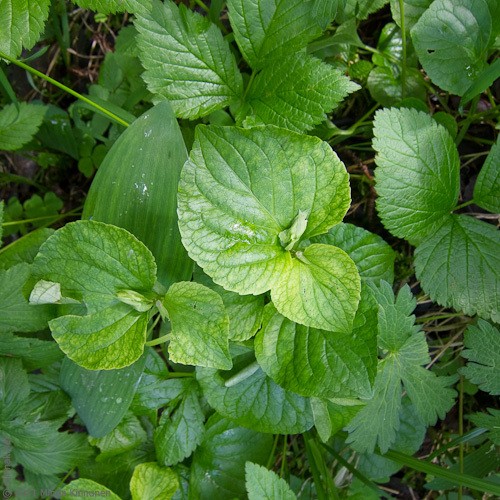
We had two specific plants we were looking for, besides of just generally admiring the plant life (which the bears seem to appreciate as well, judging by the frequent tracks). First one was the rare mountain bladder-fern (Cystopteris montana). It took us a while but we finally found it, unfortunately there were fewer of them than the last time and they were much smaller as well. The second plant we wanted to find was the wonder violet (Viola mirabilis), and when we found it I understood why it would be called like that – it was enormous! Well that’s not really the reason why it’s called a wonder violet, the name really refers to the self-pollinating flowers that don’t open up in the summer. The flower kind of has two lives, first it blooms in the spring with the typical violet flowers and size, but then instead of disappearing like the rest of the violets, it just keeps growing until it reaches this gigantic size. I had read in the book that it would be big… but when I first saw the leaves, I thought ”funny looking marsh marigold leaves” until I realised that it was the plant we had been looking for!

Despite all this abundance, I didn’t really take any pictures to speak of. I could easily spend a day there just shooting and come back the next day for more, but now I just settled with the visual input. Besides all the natural wonders, I also found that I am increasingly attracted to ferns. I’ve always liked them but I’ve never made any particular effort to either shoot them or learn their species. But this time when we were looking for a fern, I paid extra attention and… I think I have to start learning them. They can be difficult to tell apart and sometimes you need a loupe and observe the spores on the underside of the leaves to id them, but the benefit of doing that is that the spores develop late in the summer when you no longer have so many flowers to look at.
So… ferns. Only 20 pages in Den Nya Nordiska Floran, piece of cake! Not.
Lämna ett svar