
I got my snowshoes back in 2003. Snowshoeing was a very marginalised sport in Sweden back then, and it was difficult to find any snowshoe information when I was trying to decide which kind of snowshoe to get and which size I needed. Since I had trouble finding that information, I wrote a page on my homepage describing the selection process I went through but I will now retire that page because the information is getting a bit dated, so here’s an updated and less technical version of the old page.

The snowshoes I ended up with were TSL 217 and I’m happy to say that I despite all the problems I had with the decision process, I made the right choice.
All snow is not created equal. When I did my research back then, one thing that no one ever seemed to mention about snowshoes is that they will not help you much with soft snow. When you’ve got 50 cm of powder, you’d need wings to float on top of it. But having said that, a passage which is impossible without snowshoes becomes merely difficult with them, so you just need to be realistic about their ability to carry you.
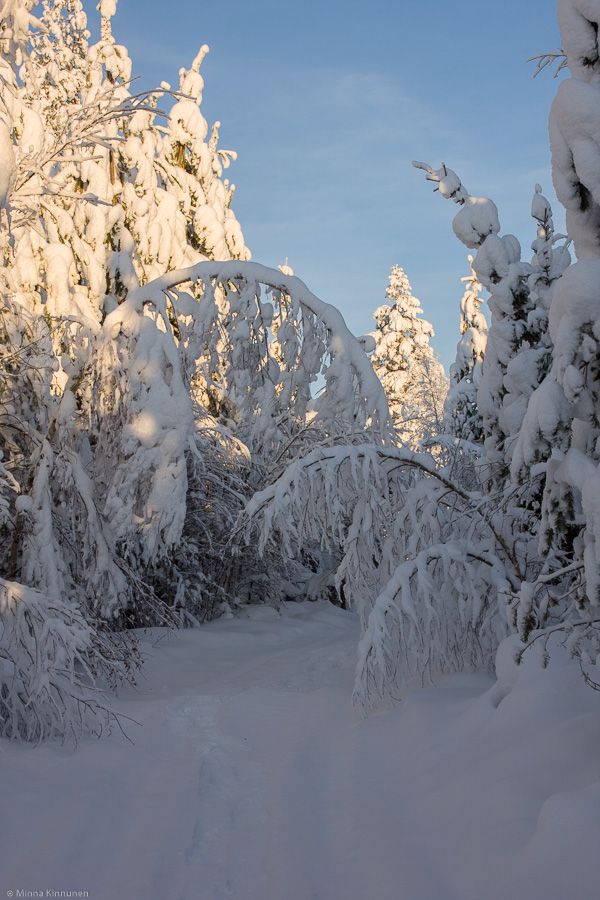
Snowshoes are also good on packed snow like snowmobile trails. Normally the trails will hold you even without skis or snowshoes, but the snow always glides a little bit under the foot and the worst part is that just when you think that the snow is hard enough to carry, it gives in and your foot sinks. Often it feels like you’re working twice as hard, going one step back for every two steps forward. This problem doesn’t exist with snowshoes, the hold is good and they even out all small gaps under the snow, allowing you to find a steady rhythm to your walk.
When you are buying your first snowshoes, it can be tricky to find out which way to go. It’s not just the size, but there are different shapes to choose from as well, and materials of course. And if you’re only ever planning to walk on packed trails, then you can get away with smaller snowshoes that allow a natural gait than those big things that would allow you to go off-trail. I chose my TSL 217’s based on the size/weight ratio (and weight means my weight, not the weight of the snowshoes), and partly also because I figured that a solid plastic shoe is less at risk to be broken than leather suspended on a frame. The 217’s help me maintain a natural gait and they are not overly heavy so the extra weight doesn’t tire you. I also like the option to raise the heel which helps a lot with steep uphills. No problems in the five years I’ve had them, although to be honest, I think they’re more like to break from old age than wear and tear. Maybe now that I’m thinking about giving up skiing, I can finally put the snowshoes to heavy use!
Snowshoeing is increasing in popularity in Sweden. Many ski resorts now have snowshoe rentals and even dedicated snowshoe trails, but it will never catch up with skiing, which is traditionally the most popular way of getting around on snow. But I do hope that snowshoeing is more than just the ”in-thing” to do right now, because it’s a lot of fun and for someone like me with a serious ski boot disability, it’s the only way to access the beautiful winter scenery!
Lämna ett svar